


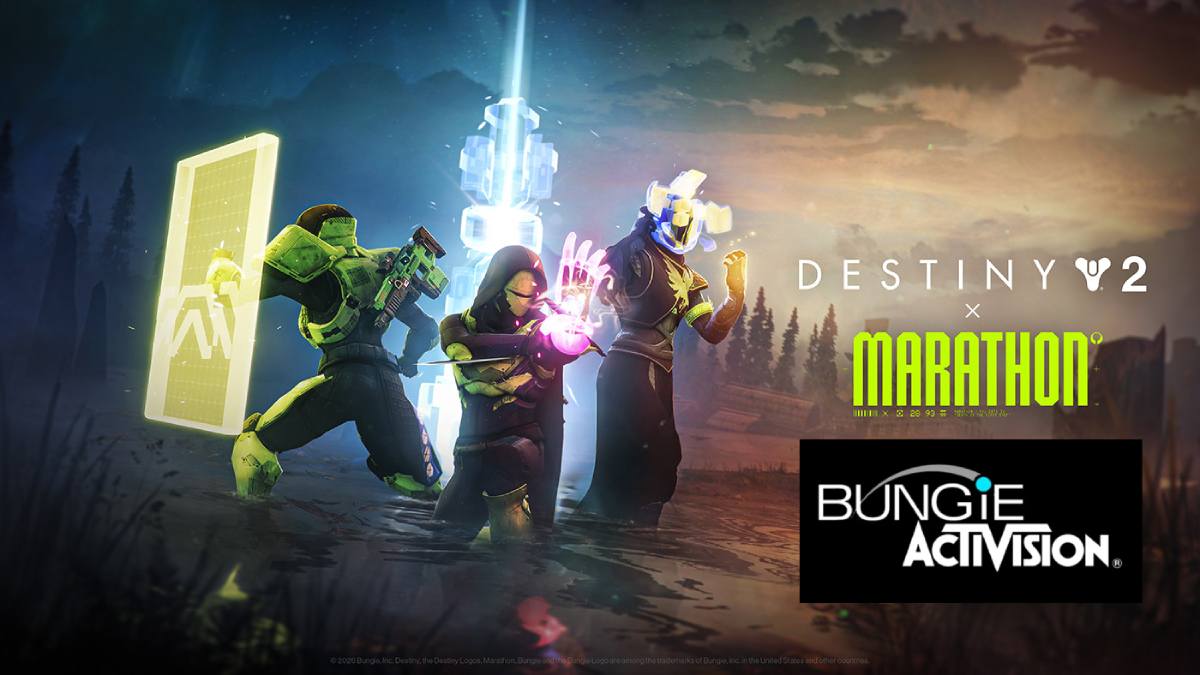
For months, the loudest theory in the Bungie community has been simple and brutal. Marathon stole the resources, Marathon stole the talent, and Marathon killed Destiny 2. But pages from the old 2010 Bungie and Activision contract tell a very different story, and they reframe the whole argument. Marathon was never the villain that showed up late to murder Destiny. It was sitting right there at the beginning, written into the same deal.
What the 2010 Contract Actually Says
The contract in question is the famous Activision and Bungie publishing agreement from April 2010, the one that a Los Angeles Superior Court judge ordered unsealed on May 21, 2012, after it surfaced during the Activision versus West and Zampella case. Most people remember it for confirming Destiny long before Bungie wanted that name in the wild.
What gets talked about far less is the other name buried in the fine print. Marathon. Right alongside the Destiny obligations, the agreement carves out room for Bungie to staff a prototype team for a future action shooter that the contract literally refers to as Marathon.
While Bungie was locked into its Activision deal, it could dedicate no more than a small slice of its staff to that action shooter prototype. So Marathon was not a secret. It was a planned sibling project, capped and conditional, but present from the start.
Marathon Was Pitched at the Same Time as Destiny
Here is the part that really resets the timeline. Destiny and Marathon were not separated by a decade of development drama. They were conceived in the same breath. The 2010 contract laid out Destiny as a series of four sci-fi action shooter titles releasing every other year starting in fall 2013, and in the same document, Bungie secured the right to keep a small prototype team chipping away at Marathon.
Stack the dates, and it gets even clearer. This deal was signed in April 2010, and Halo: Reach, Bungie’s final Halo project, launched that September. So Marathon was being written into Bungie’s future at almost the exact moment the studio was wrapping up its Halo era and pitching Destiny as its next big bet. These were not rivals born years apart. They came out of the same planning room.
The Marathon Killed Destiny Narrative Falls Apart
The modern theory leans on real and recent events, which is why it spread so fast. Critics point to Bungie management diverting roughly 200 million dollars of Destiny 2 earnings toward Marathon, and to reports that most of Bungie’s developers were moved onto Marathon rather than Destiny 2. Those are legitimate grievances. Seeing your favorite live-service game wind down while the studio chases something new stings, and Destiny 2 wrapping up its major content era only sharpened the anger.
But the 2010 paperwork complicates the tidy story that Marathon is some opportunistic parasite. Marathon did not appear out of nowhere to feed on Destiny’s corpse. It was always part of Bungie’s long-term DNA, a passion project tied to the studio’s 1994 origins that the company kept circling back to for over a decade. Blaming Destiny 2’s decline on Marathon’s mere existence ignores that Bungie always intended to run both. The two were designed to coexist, not to cannibalize each other.
The Real Problem Was Never Marathon Itself
If Marathon is not the killer, then what actually went wrong? The evidence points to decisions, not the project. The situation reads more as a Bungie management problem combined with Sony’s reluctance to keep funding expensive projects after its struggling 3.6 billion dollar acquisition of the studio. That is a story about resourcing, leadership, and corporate pressure, which is a much less satisfying villain than a single rival game.
The numbers underline how heavy that pressure became. Sony took a roughly 765 million dollar writedown tied to Bungie in 2026, yet still publicly reaffirmed that it is backing Marathon rather than walking away from it. A studio can mismanage how it splits people, money, and attention between two projects without either project being inherently to blame. Marathon’s rocky launch window and Destiny 2’s content slowdown can both be true at the same time, and both can trace back to choices made above the games themselves.
Destiny and Marathon Were Always Brothers
Strip away the console war energy and the review bombing, and the contract leaves you with a cleaner truth. Destiny and Marathon grew up together inside the same 2010 agreement, two ambitious shooters from a studio that had just left Halo behind and wanted to build something of its own. One became Bungie’s defining franchise. The other waited in the wings for years.
Calling Marathon the thing that killed Destiny 2 makes for a great rallying cry, but the paperwork does not support it. These games are not enemies. They are brothers who were written into the same future on the same day, and the friction between them today says far more about how Bungie and Sony managed that future than about the games themselves.