



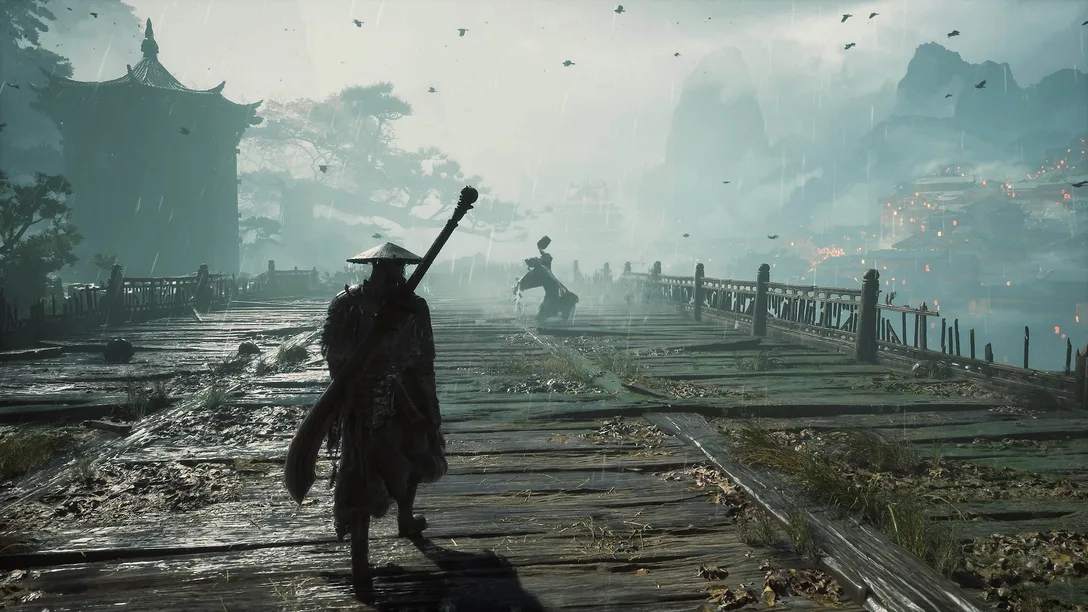
Phantom Blade Zero gives you plenty to figure out between its fast sword fights, weapon upgrades, hidden encounters, and branching questlines. A new blade might change how you approach a boss, while an unfinished side quest can leave you chasing answers several regions later.
This guide hub covers the essentials for getting started, building a useful loadout, tackling optional fights, and preparing for the True Ending. Start with the beginner advice if you’re still learning Soul’s moves, or jump to the section covering your current problem.
In brief:
- Learn when to defend, when to attack, and how weapon switching helps manage Sha-Chi.
- Start with an accessible weapon pair and spend early resources on abilities you’ll use regularly.
- Explore side routes and revisit optional bosses when your equipment is stronger.
- Check your quest progress before the finale, especially if you’re aiming for the True Ending.
Phantom Blade Zero Guide Hub: Where to Start
| What you need help with | Start here |
|---|---|
| Learning the opening hours | Beginner tips and difficulty |
| Getting staggered during fights | Combat and Sha-Chi |
| Choosing your equipment | Best early weapons |
| Spending Remnant Dust | Skills and upgrades |
| Handling a difficult optional encounter | Boss preparation |
| Finding more equipment and upgrades | Exploration and side quests |
| Preparing for the final stretch | Endings and missables |
Spoiler warning: The ending section names late-game locations and questlines. Earlier sections include early bosses and equipment.
Phantom Blade Zero Beginner Tips
Choose a difficulty that suits your first playthrough
Phantom Blade Zero offers several difficulty options. S-GAME describes Wayfarer as the story-focused choice, while Hellwalker uses more advanced and adaptive enemy intelligence. Sixty-Six Days is aimed at players seeking a tougher challenge.
For a first run, choose a setting that gives you enough breathing room to understand enemy patterns. If each encounter ends before you can recognize what happened, learning the combat becomes frustrating.
The game also supports different approaches through its arsenal, with more than 30 main weapons and 25 Phantom Edges. You have room to experiment as your options expand.
Use Bells and stealth to make exploration easier
Bells restore healing and Phantom Edge resources, and resting does not bring back ordinary defeated enemies. Make a habit of checking your supplies before leaving for another unfamiliar route.
Stealth is useful when approaching groups. Removing an isolated enemy first gives you fewer attacks to track once the remaining enemies notice you.
For the opening stretch, keep your priorities simple:
- Reach and use the next Bell.
- Practice your defensive timing against manageable enemies.
- Check side paths before advancing.
- Return to a difficult optional encounter after improving your equipment.
Blue-flash attacks call for a parry, while red-flash attacks call for a dodge. Learn that distinction early, then pay attention to the actual timing of the incoming move.
Phantom Blade Zero Combat Guide: Sha-Chi and Weapon Switching
Sha-Chi governs how long you can sustain parts of your offense and defense. Blocking drains it, and an empty gauge leaves you vulnerable to being staggered. Pressure from attacks and successful defensive actions helps wear down an opponent’s gauge.
Weapon switching helps refill your Sha-Chi. Get comfortable with both equipped weapons so that switching becomes part of your normal fighting rhythm.
These are the PlayStation inputs described in the official combat primer:
| Action | Input |
|---|---|
| Basic attack | Square |
| Powerful attack | Triangle |
| Block | Hold L1 |
| Parry | Tap L1 with the incoming attack |
| Dodge | R1 |
| Switch main weapon | Left on the D-pad |
| Power Surge | L2 when charged |
Landing attacks builds Sha-Chi Essence for Power Surge, which can interrupt an enemy and deliver heavy damage. Watch for an opening instead of activating it without considering the enemy’s next move. Check your own control layout if you have remapped inputs.
Best Early Weapons in Phantom Blade Zero
Sanguine and Sanguine Reach are a practical starting combination. The first gives you straightforward sword attacks, while the second provides broader reach for groups.
As you progress, choose replacements based on what your current setup needs.
| Weapon | How to get it | Reason to consider it |
|---|---|---|
| Sanguine | Starting weapon | Accessible moveset for learning combat |
| Sanguine Reach | Weapon rack beside Forge at the Weeping Creek Valley Outpost | Wider attacks and better reach |
| Jagged Steel | Defeat its namesake boss in Weeping Creek Valley | Bleed against susceptible enemies |
| Outlaw Warblade | Defeat Jing Ye in Crimson Forest | Healing through its standard attacks |
Watch the tradeoffs. Outlaw Warblade’s heavy attacks spend health, and Bleed has enemy-type restrictions. A weapon that works well in one encounter may need support in another.
Try a new moveset before investing heavily. Pay attention to its reach, recovery time, and how comfortably you can fit attacks between enemy combos.
Our full guide on weapons goes more in depth here.
Can you recover weapon upgrade materials?
Yes. S-GAME confirms that reforging lets you recover materials invested in a weapon and put them into another. Check the forge menu’s requirements before committing to a reset.
That gives you a way to adjust your loadout when a newly acquired blade suits your playstyle better.
Best Skills to Unlock First in Phantom Blade Zero
Abilities are trained through the Train Abilities menu at Bells. Remnant Dust pays for training, while collectible requirements also determine which nodes are available.
The following early abilities provide useful starting points:
| Ability | Listed cost | Benefit |
|---|---|---|
| Fluid Form | Free | Quick Pursuit after qualifying combat actions |
| Healing Art | 5,000 Remnant Dust | One additional Medicine use |
| Steady Composure | 5,000 Remnant Dust | Better interruption chance on the next basic attack after a dodge or parry |
| Boundless Capacity Lv. 1 | 10,000 Remnant Dust | One additional accessory slot |
| Thousand-Mile Stride | 10,000 Remnant Dust | Faster sustained sprinting |
For a combat-focused start, prioritize healing and useful follow-up options. An accessory slot becomes more valuable when you already own something worthwhile to equip.
You can reset abilities at a Bell and recover the Remnant Dust spent on them. If your current choices feel ineffective, adjust them around the problem you’re facing.
Phantom Edges, Exploration, and Missable Rewards
Phantom Edges are secondary tools with their own uses. Some also help open routes, making equipment collection part of exploration.
One early quest worth watching is the Feather Bow route. Launch guides identify it as missable if you defeat Crimson Forest’s main boss before completing its associated quest. Check available NPC requests before advancing through that encounter.
Quick Hand Zhang also asks for three relics in Crimson Forest. Game Informer’s region tips specify that these relics come from green-glowing treasure chests. Inspect the chest rewards carefully when working through his request.
Keep a short checklist as you explore:
- Unfinished NPC requests.
- Barriers you currently cannot open.
- Optional bosses you plan to revisit.
- Quest items whose purpose is still unclear.
Recording the nearest checkpoint alongside each unfinished task makes backtracking easier.
Phantom Blade Zero Boss Guide: Preparing for Optional Fights
Before another attempt, identify what ended the previous one. Running out of healing, missing a particular dodge, and dealing very little damage call for different adjustments.
A useful preparation routine is to check your weapon upgrades, review accessories, and enter with a specific attack pattern you want to learn. Spend an attempt observing the move that keeps catching you, then practice a short response you can repeat safely.
Aberrant Three-Faced Puppet
The Aberrant Three-Faced Puppet is an early optional fight that can be much more manageable when revisited later. PC Gamer recommends returning around the time you reach Pangzhen with improved equipment.
Its smoky black attacks are especially dangerous to block because they drain your stamina. Dodge those moves and use the safer openings to maintain pressure.
The encounter rewards the Three-Headed Doll story item and connects to the longer Triple-Threat quest. Its early appearance does not mean you need to finish that entire quest immediately.
Hua, Deadly Betrothed
Hua’s spider lilies make arena awareness important. Watch your footing while reading her sword attacks.
Defeating her awards the Scarlet Wraithblade, giving you access to a weapon that can create its own battlefield-controlling lilies.
Phantom Blade Zero Endings and True Ending Preparation
Late-game spoilers begin here.
The True Ending requires additional quest progress beyond following the main story. Launch guides differ on how they count the other outcomes, so this section focuses on the route requirements they describe.
Track the major True Ending questlines
As of writing, we can confirm there are two substantial questlines in its True Ending walkthrough:
| Questline | Main objectives |
|---|---|
| Secrets at the Heart of the Lake | Collect four Acolyte masks, enter the Phantom Illusionist’s realm, and complete the ritual sequence involving the Yin and Yang eyes |
| Bloodline Awakening | Complete all five Long Pillar challenges involving the Gold-Masked One |
These objectives span several regions. The fifth Long Pillar is in Mirage Estate, so completing the full sequence takes late-game progress.
Completing Quickhand’s Requests is the way to go, but we explicitly express uncertainty about whether that is mandatory. Treat this as a precaution rather than a confirmed universal requirement.
Review unfinished quests before the finale
The purple-icon questlines are the overall requirement for the True Ending. Its walkthrough advises clearing outstanding side quests before progressing through Mount Soulrend because some can become missable.
There is another warning at The Last Chance Bell before the final boss area. PowerPyx says the warning appears even when the required quests are complete, so the warning alone does not prove that you missed something.
Before continuing:
- Check the status of your purple-icon questlines.
- Confirm that Bloodline Awakening is finished.
- Review any remaining side quests.
- Resolve outstanding steps you want to complete before entering the final encounter.
The True Ending awards the “Heart and Blood” trophy or achievement.
Choose your next task around what is holding you back. If you struggle to survive, review healing, accessories, and defensive timing. If attacks feel ineffective, inspect your weapon upgrades and whether your chosen effects work against that enemy.
For a completion-focused run, make checking the quest menu part of your routine before major story fights. Keeping track of unfinished business throughout the journey is easier than trying to reconstruct every missed conversation near the finale.