



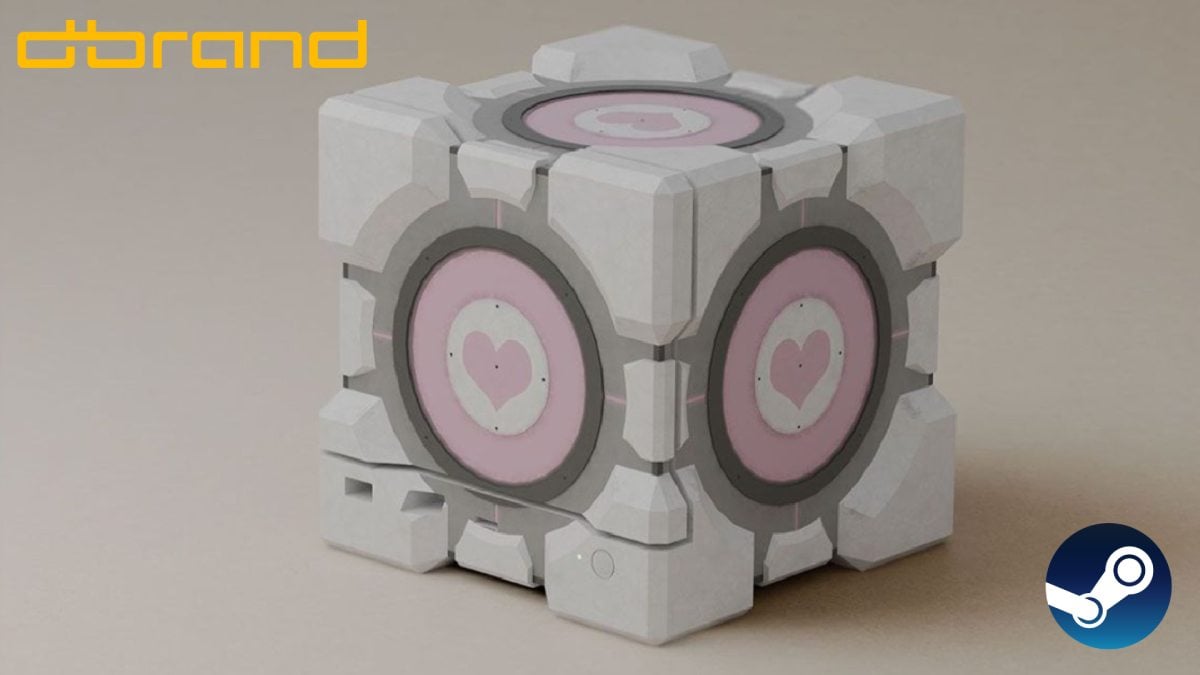
Sometimes the dumbest mistakes are the most expensive ones. dbrand just learned that the hard way, killing off one of the most hyped accessories of the year, not because of a manufacturing flaw or a supply issue, but because the company forgot to do the single most important thing before building it. It never asked Valve.
The Canadian company has announced that its Companion Cube wrap for the Steam Machine has been canceled, and anyone who already preordered one will get a refund. The reason, in dbrand’s own blunt words, is that the whole thing was made without a license. Half a year of prototyping, dozens of iterations, and a wildly successful launch, all torched over a permission slip nobody bothered to request.
The Companion Cube Skin
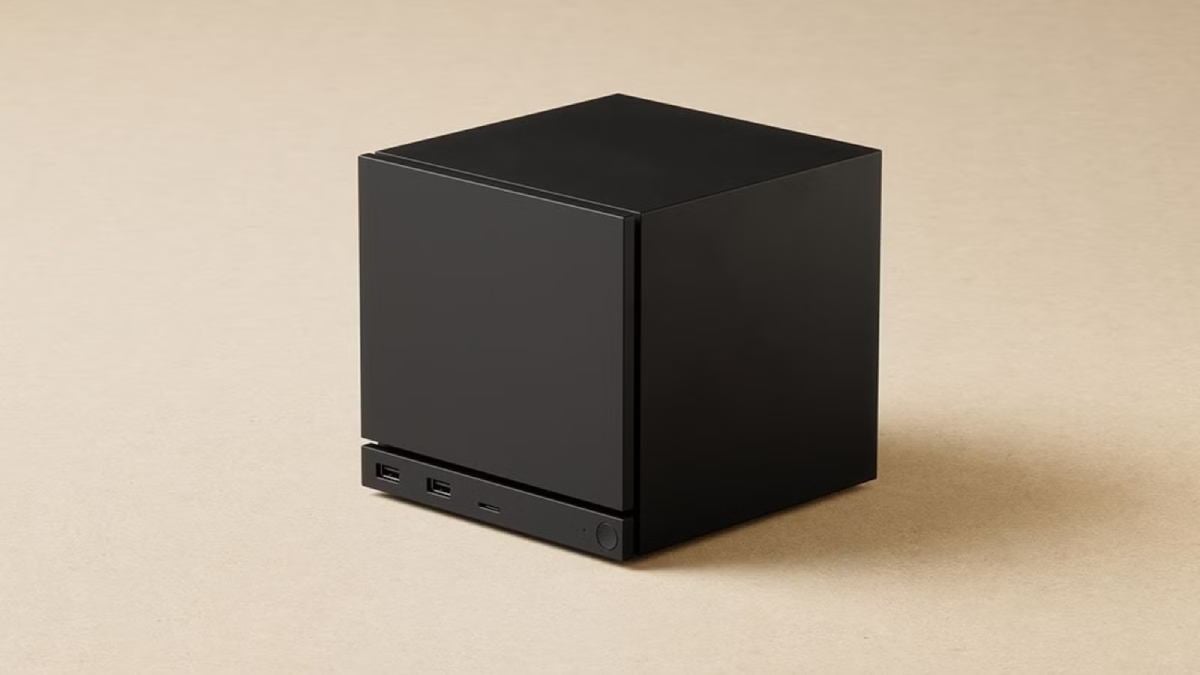
For anyone who missed it, this was not some lazy sticker job. dbrand built a full Portal-themed enclosure that turned Valve’s boxy little Steam Machine into the Companion Cube, the lovable inanimate object that fans have been emotionally attached to since 2007. It was charming, well-made, and priced to move.
The Companion Cube cost 100 dollars, or 130 depending on whether you wanted the plain cardboard “Poverty Cube” packaging or the deluxe version, which opened into a full diorama drawing on the test chamber signage from Portal and Portal 2.
People wanted it badly. dbrand described it as the second fastest-selling product in its 15-year history, behind only the Switch 2 Killswitch. So this was not a flop that got quietly shelved. It was a genuine hit that the company had to set on fire.
The Timeline That Tells the Whole Story
Here is where the “they never asked” part really lands, because dbrand had so much time to ask. On November 12, 2025, the day the Steam Machine was announced, dbrand published a concept render and a sign-up page for the Companion Cube. More than 15,000 people signed up for notifications, and the company built the idea into something real, all without ever asking Valve if it could.

Sit with that for a second. From that November tease to the June preorder launch, this was a roughly six-month development cycle. dbrand says the project required more than 1,000 hours of engineering work and 44 sets of injection molding tools.
That is dozens of physical iterations, real factory tooling, real money, real time. At any single point across those months, somebody could have sent Valve an email. Nobody did. The company built an entire product around another studio’s intellectual property and only thought about permission after the thing was already on sale.
Valve Stepped In
Once the Companion Cube was actually launched, the response from Valve was quick and exactly what you would expect. Valve’s legal team reached out, stated that the Companion Cube is Valve’s intellectual property for which dbrand has no license, and requested that the product and launch film be taken down immediately. dbrand pulled everything. The product vanished from its site, the videos disappeared, and the whole launch was effectively erased within days.
To its credit, dbrand did try to save it. The company asked Valve whether the project could continue as an officially licensed accessory, and Valve declined. That was the end of the road. And dbrand, to be fair, took the loss on the chin. The company described Valve’s legal team as direct, fair, and respectful, and admitted that, given its backwards approach of building first and asking permission later, the refusal was a fair answer.
Refunds and the Fallout
This part at least is clean. Refunds for the product are being issued, and for international customers who paid extra shipping costs, those fees are being included in the refund as well. So buyers are not out any money, even if they are out one very cool case.

There is one weird wrinkle worth noting. dbrand had already sent some Companion Cube units out to influencers, and those will likely become highly valuable collector’s items. A product that technically should not exist anymore, in the hands of a tiny number of people, is the kind of thing that ends up on resale sites for absurd prices down the line.
The Real Lesson Buried in This Mess
Strip away the Portal nostalgia and the slick marketing, and what you are left with is a basic business failure. dbrand has been doing this for fifteen years. This is a company that knows the licensing game, that has tangled with the likes of Sony before over unofficial skins. And yet it still poured six months and over a thousand engineering hours into a product based entirely on someone else’s IP without securing the rights first.
The frustrating thing is that the demand was obviously there. Fifteen thousand sign-ups on day one and a top-two launch in the company’s history prove that people would happily buy an official Companion Cube enclosure. dbrand basically ran a massive, expensive market research project and handed the results to Valve, while burning its own shot at the market in the process. As dbrand itself put it, the company made something a lot of people were excited about and then incinerated its chance to actually sell it. Build first, ask never. It is a hard lesson to learn, and an even harder one to learn publicly.
Could an Official Version Still Happen?
That is the open question now. Valve clearly has a built-in opportunity here, since the Steam Machine’s front plate is designed to be swapped out with magnets, making custom faceplates a natural fit.
The appetite for a Companion Cube version is not in doubt. Whether Valve decides to make one itself or eventually licenses the idea to someone who does it the right way remains to be seen. As of writing, the only people getting a Companion Cube Steam Machine are the handful of influencers holding what just became some very rare hardware.