



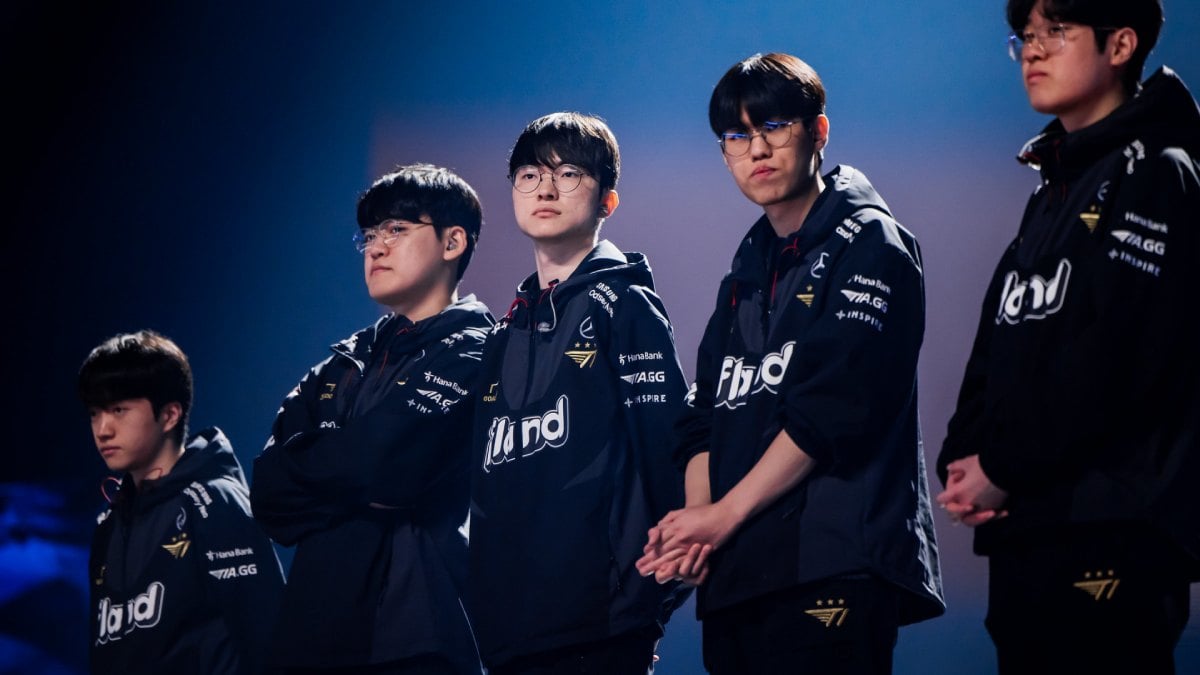
T1 has issued a new public warning aimed at people spreading malicious rumors, false information, and insulting posts about its League of Legends roster. In the statement posted by T1 LoL, the organization said it is closely monitoring online communities and social media for content that damages players’ reputations or causes psychological distress, and added that repeated or severe cases could be met with formal legal action.
On its own, that statement is serious enough. But the bigger story here is the context behind it. T1 did not point to one single incident in the notice. Instead, the statement appears to reflect a broader and increasingly ugly pattern around T1 and its players, where criticism has crossed far past normal esports discourse and into targeted harassment, rumor spreading, stalking, and organized abuse.
T1 officially made a statement
In the notice, T1 thanked fans for their support before saying it has been carefully tracking malicious rumors, false information, personal attacks, defamation, and mocking posts aimed at the team. The organization also made it clear that harming a player’s reputation and inflicting mental distress can lead to both civil and criminal liability under relevant laws. It added that it is collecting and reviewing public posts on an ongoing basis and will respond strictly when malicious behavior is repeated or severe.
That wording matters because this was not just a generic “be nice online” message. It was framed like a formal warning. T1 is signaling that it sees this as a player protection issue, not just a fan culture problem.
The most important thing to understand is that T1’s statement did not arrive in a vacuum. Recent reporting around the Korean League of Legends scene shows a wider escalation in online abuse tied to high-profile players, especially those connected to T1. Just this week, FANABLE, the agency representing Faker and former T1 ADC Gumayusi, announced it would pursue both civil and criminal action over malicious posts, defamation, and harassment targeting its players. The agency said the behavior had escalated to a point where it could no longer be ignored.
That is a major clue to the climate surrounding T1’s statement. Even though FANABLE’s action is separate from T1’s own notice, both messages point in the same direction. The problem is not ordinary fan frustration after losses. It is coordinated and repeated abuse that has become normalized in some corners of the community.
Gumayusi’s case showed how far this fan culture had spiraled
A big part of the backdrop here is the long-running harassment campaign aimed at Gumayusi during and after his time with T1. In late 2025, South Korean lawmaker Jeon Yong Gi publicly called for action after what was described as relentless and organized harassment following Gumayusi’s departure from T1. Reporting on that statement said the abuse included false rumors, manipulated comments, funeral wreaths, and protest trucks sent to T1 headquarters, physical threats, and even the circulation of a church name and address connected to the player’s family.
That reporting is important because it shows that this is not just about mean comments on a message board. In parts of the T1 fandom ecosystem, the behavior had reportedly escalated into real-world intimidation and coordinated defamation. When T1 now says it is collecting public posts and may act legally, it is speaking in the shadow of that history.
T1 has been down this road before with Faker
This is also not the first time T1 has taken a hard line over abuse aimed at its players. Back in 2022, T1 and Faker’s legal team filed lawsuits against a small group of people who had repeatedly posted malicious comments about Faker. The comments included slander aimed at Faker’s mother and offensive drawings, and T1 stressed it was acting against repeated personal attacks rather than normal criticism of performance.
That older case helps explain why the new statement sounds so firm. T1 has already established a precedent that it is willing to move beyond public warnings and into legal action when it believes player harassment crosses the line into defamation or personal abuse.
T1 is trying to draw a line before the situation gets worse
At the heart of this press release is a simple message. T1 wants its players to be able to compete without having to carry the weight of organized online abuse on top of everything else. That is what the closing lines of the statement are really about when the team says it will do everything it can to give players a stable environment and asks fans to help by reporting incidents.
Whether this warning leads to more lawsuits remains to be seen. But based on the history around Faker, the documented abuse surrounding Gumayusi, and the latest legal language coming from groups connected to T1 players, this is not a hollow statement. It looks like part of a broader effort to crack down on one of the darkest parts of modern League of Legends fandom.