


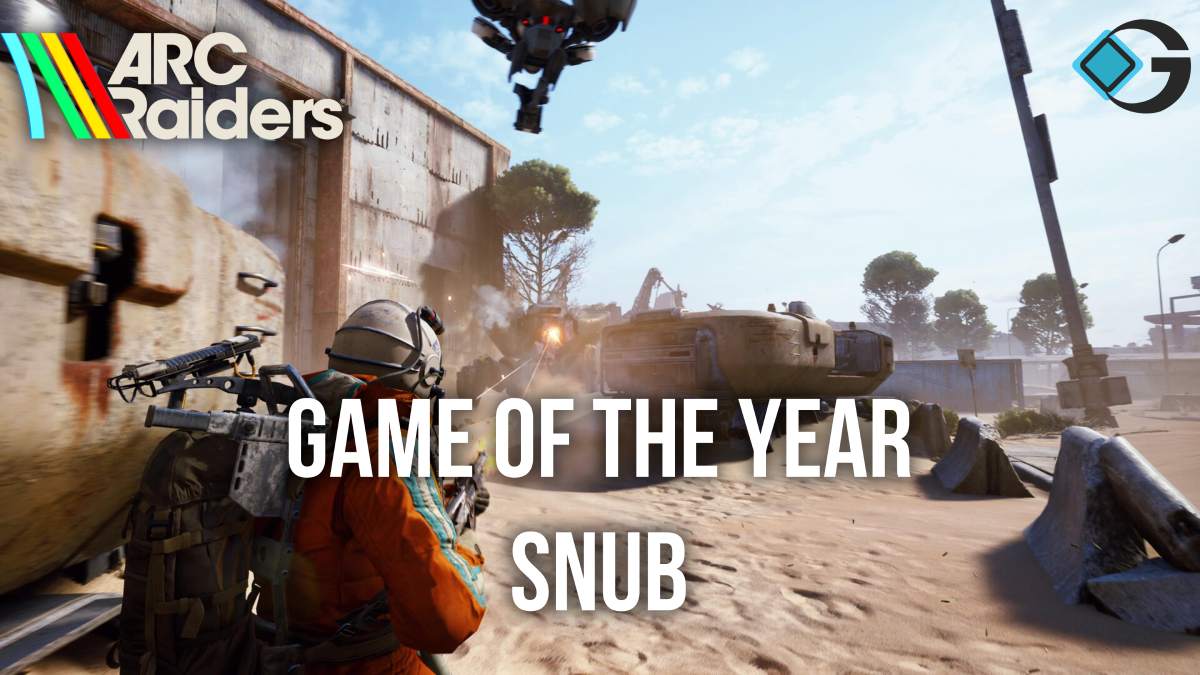
With a huge player base, positive reviews, and a new spin on PvPvE design, Embark Studios’ free-to-play extraction shooter ARC Raiders made a grand entrance in 2025. Despite this, ARC Raiders received a “Best Multiplayer” nomination rather than the top prize when the nominations for the big “Game of the Year” (GOTY) awards were announced. The question of whether games with an emphasis on multiplayer are still underappreciated in game of the year races has resurfaced due to this omission.
The Sudden Rise of ARC Raiders
Though the spotlight often falls on single-player narrative games during award season, ARC Raiders has proven it deserves attention on its own merits. It was released on October 30, 2025, on PC, PS5, and Xbox Series X/S, with a unique extraction-shooter format that blends cooperative play, player-vs-player encounters, and tense loot-and-escape loops.
Reports show that its concurrent player count on Steam skyrocketed beyond 400,000 shortly after launch, surpassing numerous other contenders in the Game of the Year discussion. Renowned streamer and FPS expert Michael “Shroud” Grzesiek has taken to the public stage to advocate for ARC Raiders as a contender for Game of the Year, emphasizing the game’s rich multiplayer experience and strong community engagement that warrant acknowledgment.
The evidence is compelling: the game is impactful, widely embraced, and attracting a significant player base.
The Snub: What Happened?
Even with its impressive performance, the game missed out on numerous prominent GOTY nominations, often overshadowed by more celebrated single-player titles. For example, the major award list for The Game Awards 2025 includes titles like Clair Obscur: Expedition 33, Death Stranding 2, and Hades 2. These are all narrative-driven or single-player focused titles. ARC Raiders, however, only earned one mention.
Despite ARC Raiders showcasing impressive scale, polish, and strong engagement, critics and community voices argued that it was overlooked, sparking a claim that “CCU (concurrent users) doesn’t count for critic choice.”
In straightforward terms, a multiplayer game that garnered significant attention was left out of the top accolades, prompting a reevaluation of how the Game of the Year categories assess various gaming experiences.
Multiplayer vs Single-Player Recognition
This oversight raises a host of complex questions within the gaming awards landscape, as there exists a persistent belief that single-player, narrative-focused titles are ideally suited for Game of the Year awards because they provide cinematic experiences, compelling writing, and engaging story arcs. In comparison, multiplayer games, even the most innovative ones, often find themselves regarded as “lesser” contenders for prestigious awards. The situation with ARC Raiders demonstrates this divide.
Player numbers, engagement, and a lasting community presence are crucial in the real world. However, critics and award juries frequently rely on different criteria such as design ambition, narrative quality, and artistic achievements to determine what is deemed the “best.” ARC Raiders showcased impressive scale, yet appeared to have missed out on other key criteria esteemed by the judges.
Did Arc Raiders Really Deserve a Nomination?
YES—across various aspects. ARC Raiders excels in numerous areas, showcasing impressive engagement, exceptional design execution, and widespread player adoption. The omission indicates that the Game of the Year discussion continues to favor specific types of experiences that are typically single-player and narrative-driven.
However, this goes beyond a single oversight. This marks a pivotal moment: as multiplayer games dominate a significant portion of gaming engagement, it’s essential for awards and critics to recalibrate their perspectives. Until that moment arrives, numerous fans will perceive the snub not just as an injustice to a specific title but as a symbol of the broader devaluation of multiplayer experiences.
The absence of ARC Raiders from the Game of the Year conversation isn’t merely a news story; it highlights a deeper, systemic problem in the way awards assess multiplayer experiences compared to single-player titles. If we genuinely hold that “the best game of the year” should embody what gamers are enjoying, what’s propelling the industry ahead, and what communities are connecting with, then overlooking a multiplayer sensation with significant momentum appears increasingly unjustifiable. The current discussion centers on the potential evolution of awards bodies or their continued disconnection from the gaming ecosystem.