



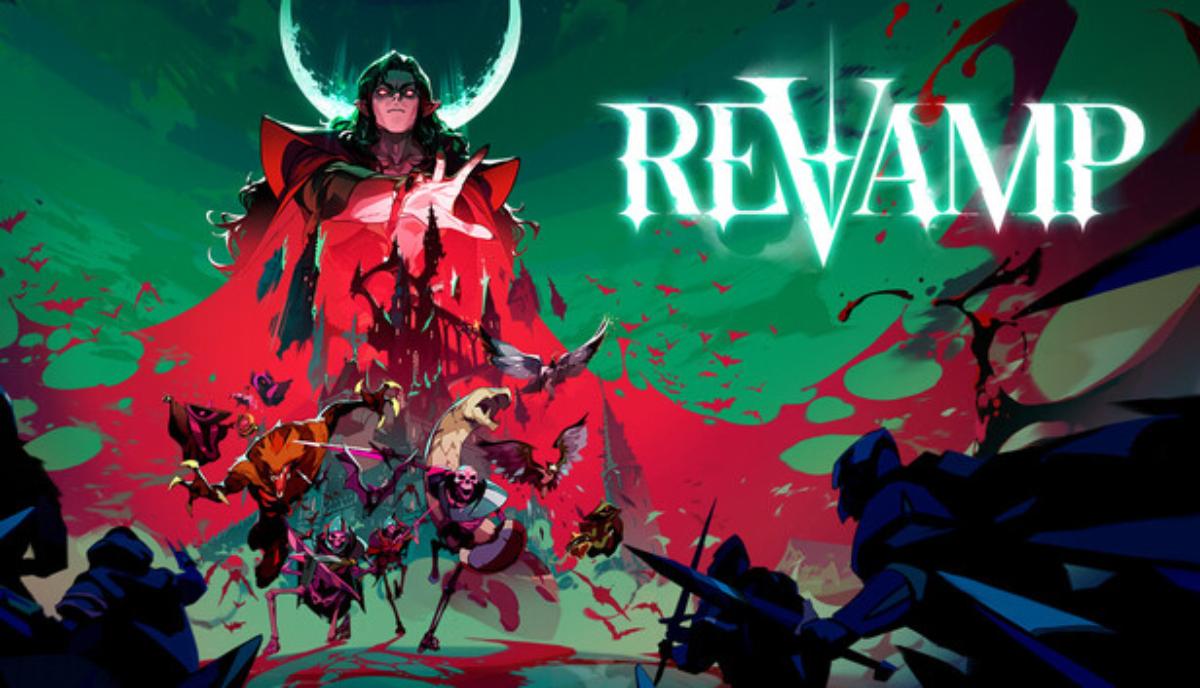
Digital Sun is keeping ReVamp’s first playtest small because it fears someone could reverse-engineer the game, clone it, and release a competing version before its own launch. The studio behind Moonlighter will begin with a more contained Discord test, pushing broader public access further back.
The decision comes as AI-assisted game cloning and ambitious fan mashups attract growing attention. Especially for developers who are preparing to share unfinished games, those projects raise an uncomfortable question about how much of their work to expose months before release.
In brief:
- ReVamp’s first playtest will run through Digital Sun’s Discord, starting October 29.
- The studio hopes to open the public playtest around January, although that timing remains tentative.
- Digital Sun fears its unfinished game could be reverse-engineered and copied before launch.
- Recent game mashups demonstrate increasingly ambitious community development, raising questions about copyright enforcement and access to early builds.
Digital Sun Is Limiting the ReVamp Playtest
In its statement, Digital Sun thanked everyone who requested access on Steam before explaining why it had changed plans.
“We’ve been concerned by recent news of games being reverse-engineered, cloned and published before the original is even out,” the studio said.
With release still months away, Digital Sun felt that distributing a large public build created too much risk. It apologised to Steam applicants and directed interested players toward the smaller Discord playtest beginning October 29. The team hopes to offer public access around January.
Digital Sun is reducing early exposure while it continues toward launch, rather than abandoning public testing altogether. Its statement also stops short of alleging that anyone has already cloned ReVamp.
The game’s Steam page currently lists a planned release date of March 25, 2027. Described as a “Tower Defensevania,” ReVamp puts players in control of Dracula, building a castle room by room, commanding monsters, and personally fighting invading enemies.
So, that combination gives Digital Sun plenty to test, including castle layouts, defensive units, combat, and progression. Restricting access means fewer players can try those systems early and help the studio identify problems.
AI Game Cloning Is Already Affecting Demo Plans
Digital Sun’s concern reflects a broader change in how some developers view public demos.
Game Developer reports that the team behind Drunken Goddess Reflux also withdrew its planned Steam Next Fest demo amid concerns about AI-assisted copying. Its coverage describes developers reporting that trailers, screenshots, and demos have been used as reference material for quickly produced imitations.
For an unreleased indie game, the commercial risk is easy to understand. A copycat could compete for attention while the original team is still polishing its work. Even an incomplete imitation could muddy search results, confuse potential buyers, or make the original concept feel familiar before launch.
Those are possible consequences, rather than demonstrated losses for ReVamp. Digital Sun’s announcement is a precaution based on what it sees happening elsewhere.
Reverse Engineering and Game Mashups Are Becoming More Ambitious
One concrete example of the current mashup trend is developer chasmlol’s project combining Call of Duty: Modern Warfare 2, Skate 3, and Minecraft.
According to its public GitHub documentation, the project uses IW4L, a Rust rewrite of Modern Warfare 2, as its foundation. It adds a Skate 3 mode with skating physics, tricks, and grinds, alongside a Minecraft world where players can use MW2 weapons, break blocks, and interact with mobs. The creator explicitly describes the project as unaffiliated with the original rights holders.
Obviously, that example helps explain what people mean when they talk about “merging games.” Developers are making systems from different games operate within a shared playable environment. In this project, shooting, skating, and block-based environments interact.
The repository also lists prerequisites and known issues. Its existence demonstrates a substantial community experiment, but it does not establish that every commercial game can be perfectly reconstructed or combined automatically.
AI’s role in reverse engineering deserves the same care. A recent research paper comparing AI agents with human analysts found that the strongest agents achieved human-competitive understanding on two compact software-analysis tasks. However, the researchers also identified difficulties scaling that work to larger programs. Those findings support growing technical capability while leaving significant limits around complexity and reliability.
And for studios, the concern is that even partial reconstruction could become useful to someone trying to imitate a game. A competitor may only need to reproduce its most appealing feature to start attracting attention.
Fan Mashups and Commercial Clones Raise Different Questions
The projects being discussed have different purposes and consequences. A fan experimenting with older games, a developer studying software compatibility, and a company releasing a commercial imitation should each be assessed on their own facts.
U.S. law includes a limited reverse-engineering provision for interoperability under specific conditions. However, that provision does not create unrestricted permission to copy and distribute another developer’s game. Other copyright rules and applicable exceptions still matter.
Digital Sun’s immediate concern is the possibility of an imitation reaching players before ReVamp does. The studio has not identified the MW2 mashup, or any particular fan project, as the reason for its decision.
How This Could Affect IP Ownership at Major Game Studios
Reverse engineering does not automatically transfer ownership of a game’s intellectual property. Rebuilding software or combining elements from several franchises does not, by itself, grant ownership of the original protected material.
In the United States, copyright protects original expression, including eligible software code and audiovisual material. Copyright owners also hold rights over reproduction and derivative works, subject to statutory limitations and exceptions.
However, copyright does not protect every ingredient of a game. The U.S. Copyright Office distinguishes protected expression from functional elements such as algorithms, logic, and system design. Its guidance also identifies underlying game ideas and methods of play as uncopyrightable elements.
As such, this creates a practical challenge for large studios. A project that copies protected material raises different issues from one that independently implements a similar gameplay idea. Resolving disputes requires examining what was actually copied, how it was obtained, and what was distributed.
If reconstruction and imitation become faster, major publishers could face more enforcement work without losing their underlying rights. They may also reconsider when and how they distribute playable builds.
Possible responses include smaller testing groups, later demos, stronger monitoring of unauthorised releases, or clearer licensing arrangements for community projects. These are potential industry responses, not measures Digital Sun has announced beyond restricting its first test.
There is also a cost to becoming more restrictive. Fewer public builds would give players fewer opportunities to assess games before buying, while developers would lose feedback and opportunities to build an audience.
ReVamp Highlights the Pressure on Early Game Access
Digital Sun closes its statement by explaining that showing games early helps independent studios find the fans who support them. They want platforms to strengthen protections for original work so developers can keep sharing those builds.
According to Digital Sun, ReVamp’s approach is to start smaller. The Discord playtest begins October 29, with broader public testing tentatively targeted for January. Whether other studios follow will depend partly on how effectively platforms respond to the copying concerns already changing developers’ plans.