


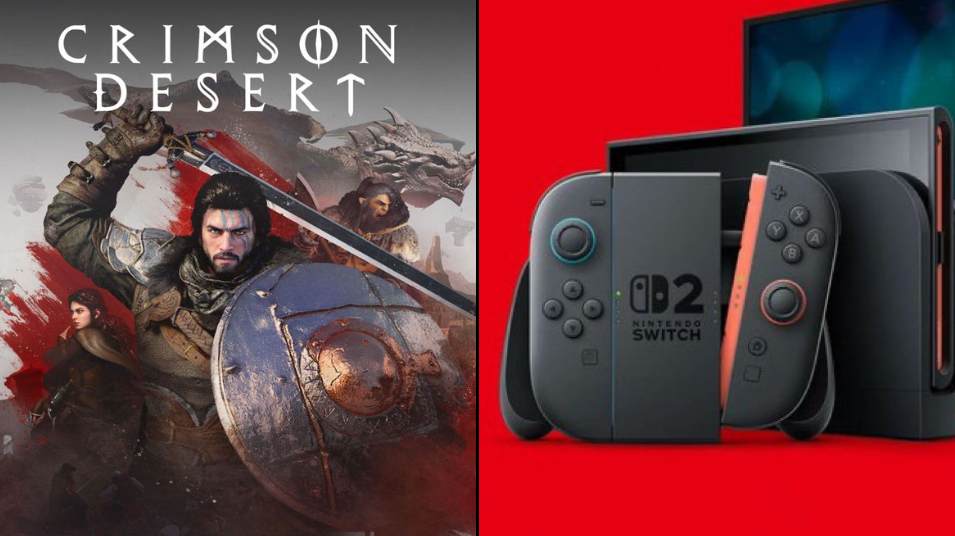
Pearl Abyss is officially looking into bringing Crimson Desert to Nintendo Switch 2, and that is a pretty big deal when you consider just how demanding the game already is on current hardware. According to comments attributed to Pearl Abyss CEO Heo Jin-young from a recent shareholder meeting, the studio has started research and development for a Switch 2 version, while also admitting that some parts of the game would likely need to be scaled back because Nintendo’s new system still sits below other consoles in raw specs.
That alone is enough to turn heads, but the story gets even more interesting when you add Digital Foundry’s take into the mix. In a recent post discussing the idea, the outlet said it believes Switch 2 could likely handle a playable version of Crimson Desert, though only with caveats. That kind of phrasing matters because it suggests a port is possible, but not without some serious technical compromises and clever use of upscaling.
Pearl Abyss says compromises would be necessary
The most important part of this story is that Pearl Abyss is not pretending that a Switch 2 version would be simple. The company’s own messaging makes it clear that the hardware gap is real. In the shareholder meeting coverage, Heo Jin-young said there are “parts we have to give up” due to the lower specifications of the Switch 2 compared to other console devices. In other words, this is not being framed as a straight one-to-one conversion of the existing game.
That is honestly the most realistic way to approach a game like Crimson Desert. This is not a lightweight action title that can be thrown onto weaker hardware with a simple resolution cut. It is one of the most visually ambitious open-world games released this year, and even on more powerful platforms, it has already built a reputation around its huge scale, detailed environments, and heavy technical demands.
Crimson Desert Switch 2 port sounds plausible
A few years ago, the idea of a portable version of Crimson Desert would have sounded ridiculous. Now it sounds difficult, but not impossible. That shift mostly comes down to Switch 2’s expected use of Nvidia upscaling technology and the fact that developers are increasingly getting better at targeting scalable versions of modern games. Digital Foundry’s view that the hardware could probably manage a playable version at 30 frames per second with upscaling is the kind of technical vote of confidence that gives this rumor real weight.
The other reason this feels believable is that Pearl Abyss is already thinking in those terms. The studio is not announcing a release date or pretending the port is far along. It is still in the research phase, which is exactly where a project like this should start. That gives the team room to test what can be cut, what can be rebuilt, and what kind of image quality and performance target would actually make sense on Nintendo’s hardware.
What would likely need to change on Switch 2?
If Crimson Desert does make the jump, nobody should expect the exact same experience players are getting elsewhere. The most obvious sacrifices would likely come in image quality, draw distance, environmental density, shadow quality, and possibly some of the more expensive effects that help make the game look so impressive on higher-end systems. Pearl Abyss has not listed those specific cuts, but its own warning that some parts would need to be given up strongly suggests that visual tradeoffs are already part of the discussion.
That does not automatically make the idea less exciting. The appeal of a Switch 2 version would not be having the best-looking version of Crimson Desert. It would be having a portable or more flexible way to play one of the year’s biggest open-world action games. If the studio can land at a stable 30fps with smart upscaling and trimmed back visuals, plenty of people would take that deal.
Crimson Desert is the kind of game that tests hardware limits
This is also why the conversation matters beyond just one game. Crimson Desert has become a kind of stress test for hardware discussions because it is such a demanding title by design. Recent reporting around the game’s tech has highlighted support for advanced upscaling features like DLSS 4 on PC, which only reinforces how ambitious Pearl Abyss has been with the project from a rendering standpoint.
So if Switch 2 can run something like this in a form that still feels good to play, it says a lot about what Nintendo’s new machine can realistically handle. It would not mean Switch 2 is suddenly on par with a PS5 or a high-end gaming PC. It would mean the platform is capable of receiving scaled versions of much bigger and heavier games than many people originally expected.
No port has been announced yet, but the interest is real
That is the part worth keeping clear. Pearl Abyss has not officially announced Crimson Desert for Nintendo Switch 2. What it has done is confirm internal R&D and admit that compromises would be part of the process. That is not the same thing as a launch plan, but it is far more substantial than random speculation.
And honestly, that is enough to make this worth watching. When a studio behind one of the most graphically demanding games of the year openly says it has started researching a Switch 2 version, that tells you the hardware conversation around Nintendo’s next system is only getting more interesting.
Crimson Desert on Switch 2 could be a huge test for Nintendo’s new hardware
If Pearl Abyss manages to pull it off, Crimson Desert could end up being one of the most fascinating third-party ports on Switch 2. Not because it would look identical to the versions on stronger hardware, but because getting a massive open-world game like this running well on a portable leaning system would be impressive in its own right.
The project remains in the exploration stage, as of writing. Still, between Pearl Abyss openly acknowledging the work and Digital Foundry suggesting a 30fps upscaled version is plausible, this no longer feels like a wild fantasy. It feels like the kind of port that could actually happen, provided the studio is willing to make the right cuts, and Nintendo’s hardware holds up the way early analysis suggests it can.