



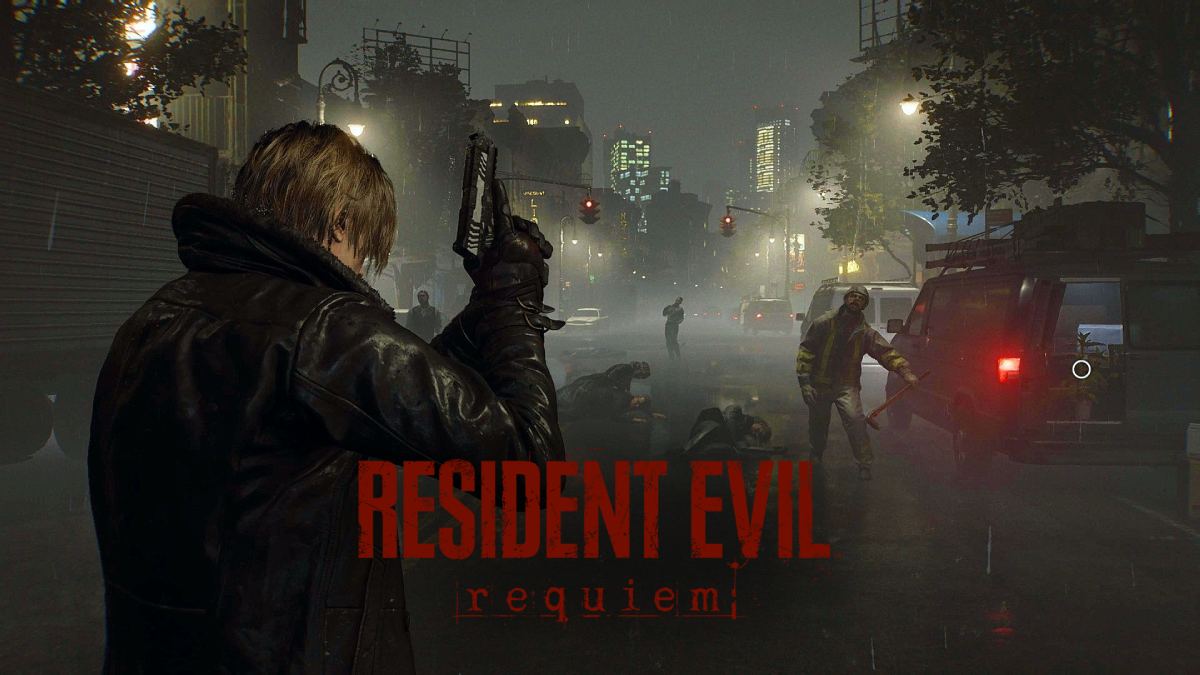
Resident Evil Requiem brings back one of the series’ most recognizable mechanics, but with a modern twist. Saving in the game depends heavily on the difficulty you choose, and that can dramatically change how tense your first playthrough feels. On easier and more modern settings, manual saves are much more forgiving, and autosaves are frequent. On the more traditional settings, save management becomes part of the survival horror itself.
If you are confused about how autosave and manual save work in Resident Evil Requiem, the short version is simple. Grace manually saves at typewriters, Leon uses computers, and higher difficulties bring back Ink Ribbons as a required resource for manual saving. Autosaves also become much less generous on the more classic style modes.
How manual saving works in Resident Evil Requiem
Manual saving in Resident Evil Requiem is done through fixed save stations placed around the map. According to Capcom’s official web manual, Grace saves manually at typewriters. Also, Leon uses computers for manual saves, with both save points usually found inside safe rooms or locations where enemies cannot enter.
That means you cannot simply pause and save anywhere. Like older Resident Evil games, Requiem ties manual saving to specific rooms and devices. This alone adds a layer of tension, because reaching a save point often means surviving the section in between without making a major mistake.
Do you need Ink Ribbons to save?
Yes, but only on certain difficulty settings. Capcom’s official manual states that Ink Ribbons are required to save the game when playing on Standard Classic mode and above. Manual saving requires Ink Ribbons on Standard Classic and Insanity. Also, Grace must spend an Ink Ribbon at a typewriter in Standard Classic, and that Ink Ribbon Tins can also be crafted into usable Ink Ribbons with Infected Blood.
On the other hand, Standard Modern does not require Ink Ribbons for saving, and you can save as often as you want there. That makes Standard Modern much friendlier for first-time players, since you can lock in your progress without worrying about consuming a limited resource.
How autosave works in Resident Evil Requiem
Resident Evil Requiem also includes an autosave system, but it is not equally generous across all modes. The game autosaves at specific moments, such as when you approach a boss fight or puzzle area, and that the game usually reloads the latest autosave after death. Also, autosaves can trigger during key progression beats such as entering a new area, after cutscenes, after solving puzzles, after tough bosses, and even during character swaps.
In practice, this means autosaves are there to protect players from losing huge chunks of progress, but they are not meant to replace manual saving entirely. They are more like safety nets than a full convenience system. On a blind run, relying only on autosaves can still leave you replaying more than you expected.
Autosave vs manual save in each difficulty mode
The biggest difference between Resident Evil Requiem’s save systems comes down to difficulty. The Casual mode has frequent autosaves and no Ink Ribbon concern at all. Standard Modern also keeps autosaves plentiful and removes Ink Ribbon pressure. Standard Classic uses the same general combat and puzzle balance as Modern, but autosaves are scarce, and manual saving consumes Ink Ribbons.
Autosave locations are reduced in both Standard Classic and Insanity. And Ink Ribbons are required for manual saves in those modes. So while Requiem does have autosaves across the game, the frequency and usefulness of those autosaves change a lot depending on whether you are playing in a modern or classic style.
Why does the save system matter so much in Resident Evil Requiem?
Resident Evil Requiem’s save system is not just a convenience setting. It changes the tone of the entire game. In Standard Modern, you can play more confidently because progress is easier to preserve. In Standard Classic and Insanity, every save becomes a resource decision. This makes each trip away from a safe room more tense, especially when Grace’s limited inventory also has to make room for Ink Ribbons or Ink Ribbon Tins.
This is why two players can come away from Requiem with very different experiences, even if enemy damage and item placement are otherwise similar. The save system creates pressure, and in survival horror, pressure often matters just as much as combat.
Should you rely on autosave or manual save
As a beginner, manual saving should still be your main habit. Autosaves help, but they are triggered at set moments rather than whenever you want. It is recommended not to rely on autosave as your primary method because it is less precise than saving manually at a typewriter, especially when you are trying to protect progress before a dangerous section.
That is especially true on higher difficulties where autosave points are reduced. If you are playing on Standard Classic or Insanity, careful manual saves can save you from replaying a long stretch after one bad encounter. If you are on Standard Modern or Casual, manual saves are still worth using often, simply because they give you more control over where you restart.
Best saving advice for your first playthrough
As a complete beginner, Standard Modern gives you the easiest save experience because manual saves are unrestricted, and autosaves remain frequent. That is one of the main reasons it is widely recommended as the best starting difficulty for most players. Standard Classic is more appealing if you want the older Resident Evil feeling, where save management is part of the challenge rather than just a background system.
So if you want the least stressful approach, use Standard Modern and save regularly at every safe opportunity. If you want maximum tension and do not mind planning your route around limited saves, Standard Classic gives Requiem a much more old-school survival horror feel.
Resident Evil Requiem uses both autosave and manual save, but they are not equally important on every difficulty. Manual saving happens at typewriters for Grace and computers for Leon, while autosaves trigger at key progression points. The real twist is that Standard Classic and Insanity turn manual saving into a resource management system through Ink Ribbons, while Standard Modern and Casual let players save much more freely.
That makes the save system one of the most important parts of the game’s overall tension. If you are choosing your first difficulty, remember that you are not just deciding how hard enemies hit. You are also deciding how safe your progress feels from one room to the next.