



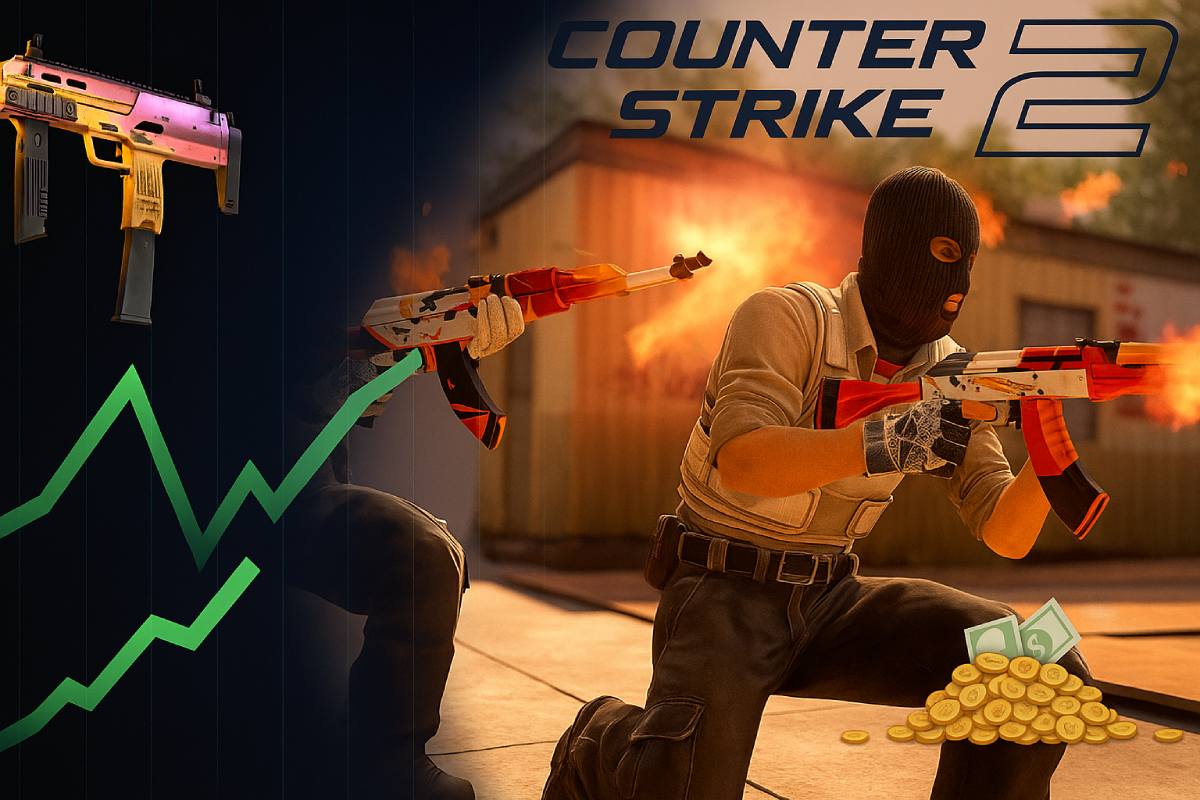
In the world of competitive shooters and digital loot, the high-stakes trading of cosmetic goods in Counter-Strike 2 has gotten a lot of attention. The market has plummeted sharply all of a sudden. Reports say that more than $1 billion in value has disappeared virtually overnight because Valve Corporation made big changes that hurt the economics of skins and knives.
This article unpacks exactly what went wrong, why it matters, and what it could mean for players, traders, and the broader esports economy.
The Crash: What happened?
Earlier this week, CS2’s skin economy took a dramatic hit. According to multiple industry sources, the total market cap for CS2 skins dropped from about $5.9 billion to about $4.2 billion, losing nearly $1.7 billion in value. With Valve’s update, users may now trade up their skins. They can trade five Covert-tier (red) skins for a knife or gloves from the same collection.
Because of this, knives and gloves that used to be incredibly rare lost a lot of their value. Also, with so many new high-tier items coming out, important goods that were quite expensive dropped by 50% or more. In the meantime, some red-skins, the ones used in the trade-up, actually went up in value as traders tried to take advantage of the new arrangement.
In short, what was once rare and prized is now much easier to obtain, and the market responded fast and harshly.
Why it matters
For players and collectors
If you have a rare knife or glove in CS2, it’s likely that you now have a far less valuable item. Many things that sold for thousands of dollars just a few days ago are now going down in price quickly.
For casual players, the upgrade might seem like a gain; knives are easier to get, but for collectors and traders, it’s a bad thing: scarcity has been lessened, and value has been lost.
For Valve and game design
Valve’s decision to put the trade-up mechanism in place seems to be an attempt to make rare goods more available to everyone, but the trade-off is that the value of the rare items that are already out there will go down. It shows that Valve is changing how they think about the in-game economy, putting user access ahead of keeping a market driven by traders. One expert even said, “It could be part of a bigger shift away from loot boxes and rare drops toward systems that are easier to understand.”
For Valve & the industry:
The collapse makes people wonder about how virtual economies are regulated, how much they are worth, and how much players trust them. Future upgrades may put more emphasis on accessibility than uniqueness, and by extension, speculative value. Other games might follow suit or use this as a warning: virtual economies are weak, especially when they involve real money.
The CS2 skins market crisis, which saw more than $1 billion in value disappear, is a clear example of how digital economies can change quickly and how risky the idea of “investing” in a skin is. This is a wake-up call for players who think that rare knives will keep their worth. And for gaming developers, it’s proof that running virtual economies requires more planning than ever.